wheelbarrow puncture proof tire searches usually come from the same place: you’re tired of stopping mid-job to patch a tube, drag out a compressor, or wrestle with slime that still doesn’t hold.
If you use a wheelbarrow on gravel, thorns, construction debris, or goathead weeds, “flat-proof” isn’t a luxury, it’s the difference between finishing a run and parking the barrow. The tricky part is that puncture-resistant and puncture-proof are not the same thing, and the best choice depends on load, terrain, and how much “bounce” you can tolerate.
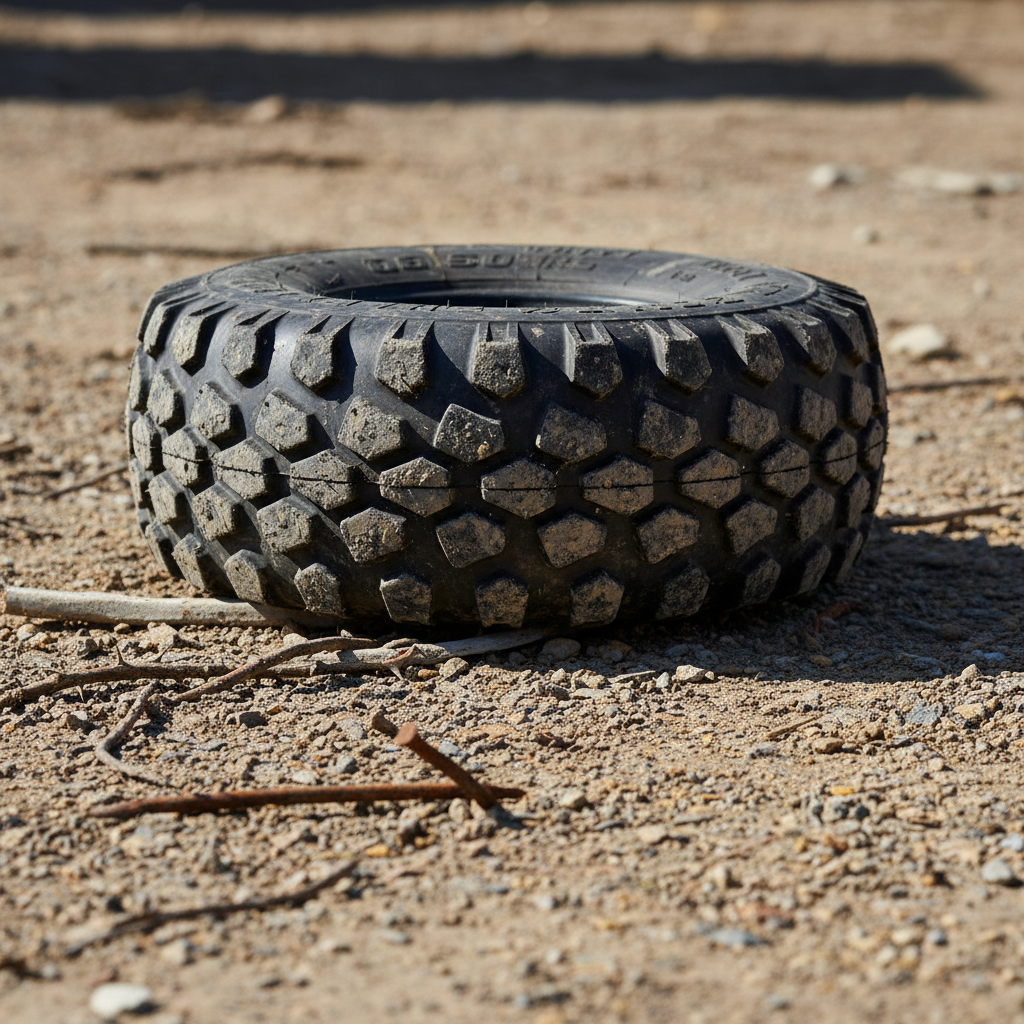
This guide breaks down what actually works in the real world, how to tell if your wheelbarrow can take an airless upgrade, and what to watch for so you don’t trade flats for a rough ride or a wobbly wheel.
What “puncture proof” really means for a wheelbarrow
In the market, “puncture proof” typically points to airless tires (solid foam or polyurethane) because there’s no inner tube and no air chamber to lose. That’s the straightforward version.
You’ll also see “flat-free” used on semi-pneumatic designs and heavy-duty pneumatic tires with thicker tread plus sealant, but these can still fail if the casing gets cut or the valve leaks. They’re often more “puncture resistant” than truly puncture proof.
- Airless (solid/foam): no flats, less maintenance, often harsher ride.
- Semi-pneumatic: no tube, some flex, can still deform under heavy loads.
- Pneumatic + sealant: keeps the cushy ride, reduces flats, but not immune.
According to OSHA (general workplace guidance), keeping equipment in safe operating condition matters for injury prevention, and an underinflated tire can increase tip risk and strain during handling. A “no-air” setup can help consistency, but only if it matches your load and wheelbarrow frame.
Why wheelbarrow tires keep going flat (and when “flat-proof” is worth it)
Most flats aren’t random bad luck, they’re predictable based on where and how you work. If any of these sound familiar, a wheelbarrow puncture proof tire upgrade tends to pay off fast.
Common causes in the field
- Thorns and goatheads in dry regions, they slowly work through tread and into tubes.
- Staples, nails, wire around remodels and job sites.
- Pinch flats when the tire hits edges while underinflated.
- Dry rot from sun exposure, cracks appear and the tube starts leaking.
- Overloading, the casing flexes more, tread punctures become easier.
But reality check: if you move fragile loads (pavers you don’t want bouncing, mixed mortar, delicate plants), you might still prefer pneumatic with sealant because comfort and stability can matter more than never getting a flat.
Quick self-check: do you need airless, or just better pneumatic?
This is the part people skip, then they buy the “flat-free” option and hate it. Use this quick checklist to narrow it down.
- Terrain: mostly gravel, thorns, scrap metal, or demolition debris → lean airless.
- Loads: routinely heavy (concrete, stone, wet soil) → prioritize load rating and bearing quality, not just “no flat.”
- Comfort: you care about shock absorption (uneven yard, long pushes) → pneumatic + sealant may feel better.
- Storage: outdoors in sun/rain → airless avoids UV-cracked tubes, but check wheel hardware for rust.
- Maintenance tolerance: if you never want to check PSI again → airless is the cleanest solution.
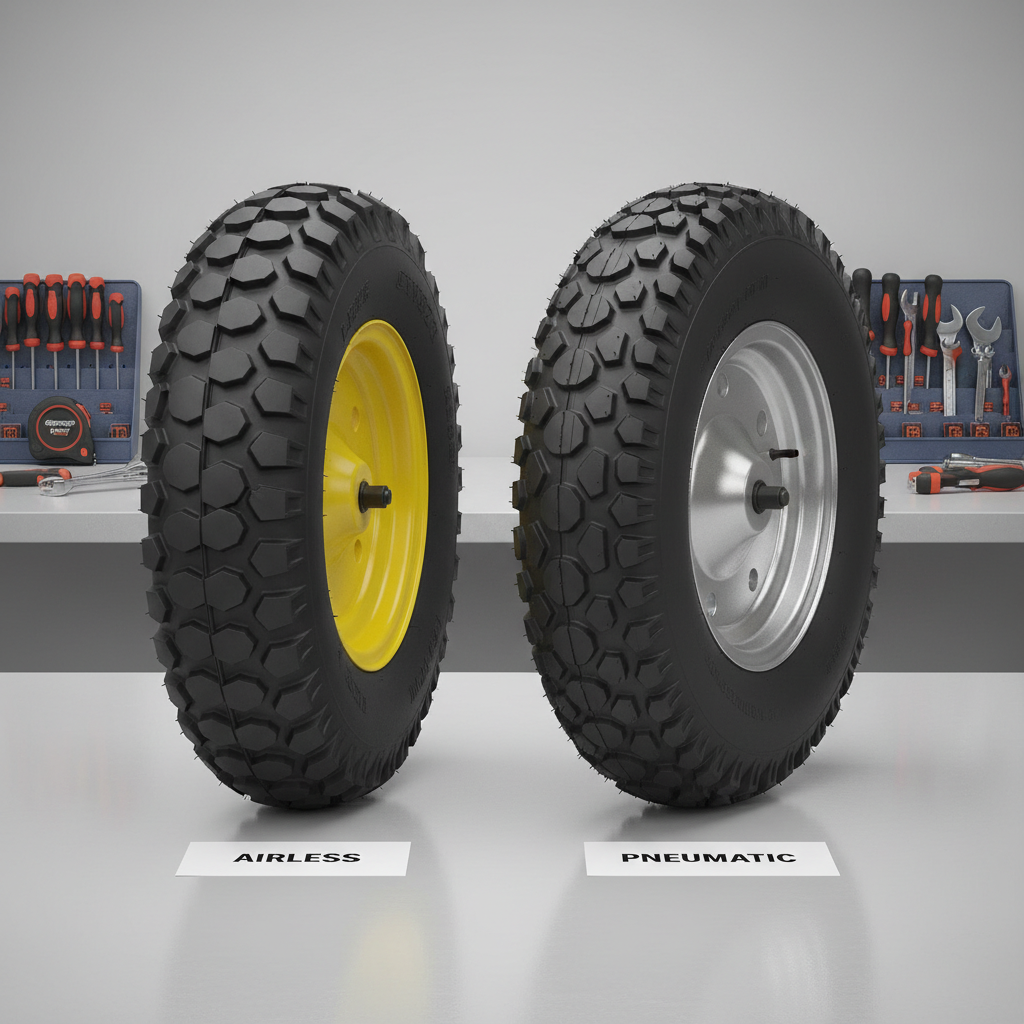
If you’re on the fence, consider a hybrid approach: keep pneumatic but add sealant and a tougher casing, then switch to a truly puncture-proof setup only if flats keep happening.
Choosing the right wheelbarrow puncture proof tire: sizing and compatibility
The most common buying mistake is getting the size “close enough,” then realizing the axle, hub length, or bearing bore doesn’t match your wheelbarrow. Measure before you shop.
What to measure
- Tire size marking: often 4.80/4.00-8 (8-inch rim). Match the rim size exactly.
- Axle diameter: common bores are 5/8 inch or 3/4 inch, but verify.
- Hub length: measure the hub width so it fits between frame arms.
- Offset: some wheels are centered, some offset, wrong offset can cause rubbing.
Also check your wheelbarrow fork clearance. Some airless tires run slightly wider, and a tight frame can rub, especially once debris builds up.
Airless vs pneumatic vs semi-pneumatic: a practical comparison
Here’s a simple table you can actually use while shopping. Focus on what you feel day to day: pushing effort, stability, and how often you want to think about maintenance.
| Type | Flat risk | Ride comfort | Best for | Watch-outs |
|---|---|---|---|---|
| Airless (solid/foam) | Very low | Firm | Thorns, jobsite debris, storage outdoors | Can feel bouncy or harsh, quality varies a lot |
| Semi-pneumatic | Low | Medium | Mixed terrain, moderate loads | May deform under heavy load, sometimes less stable |
| Pneumatic + sealant | Medium | High | Landscaping, long pushes, fragile materials | Still needs PSI checks, sealant can get messy |
Key takeaway: if your main pain is repeated punctures from thorns or scrap, a wheelbarrow puncture proof tire (true airless) usually ends the problem. If your pain is “hard to push” and “tips easily,” don’t ignore wheel quality, bearings, and correct inflation.
Installation and setup tips that prevent new headaches
Even a great tire can feel bad if it’s installed poorly or mismatched to the wheelbarrow. These steps stay pretty consistent across brands.
Before you install
- Clean the fork arms, check for bent metal and rubbing marks.
- Inspect the axle for grooves and rust, replace if the wheel rocks side to side.
- Confirm bearings or bushings match your axle diameter.
During install
- Don’t overtighten the axle nut, the wheel should spin freely without wobble.
- Use washers as spacers when needed, especially if hub length runs short.
- If you keep pneumatic, inflate to the tire’s rated PSI range, underinflation invites pinch flats.
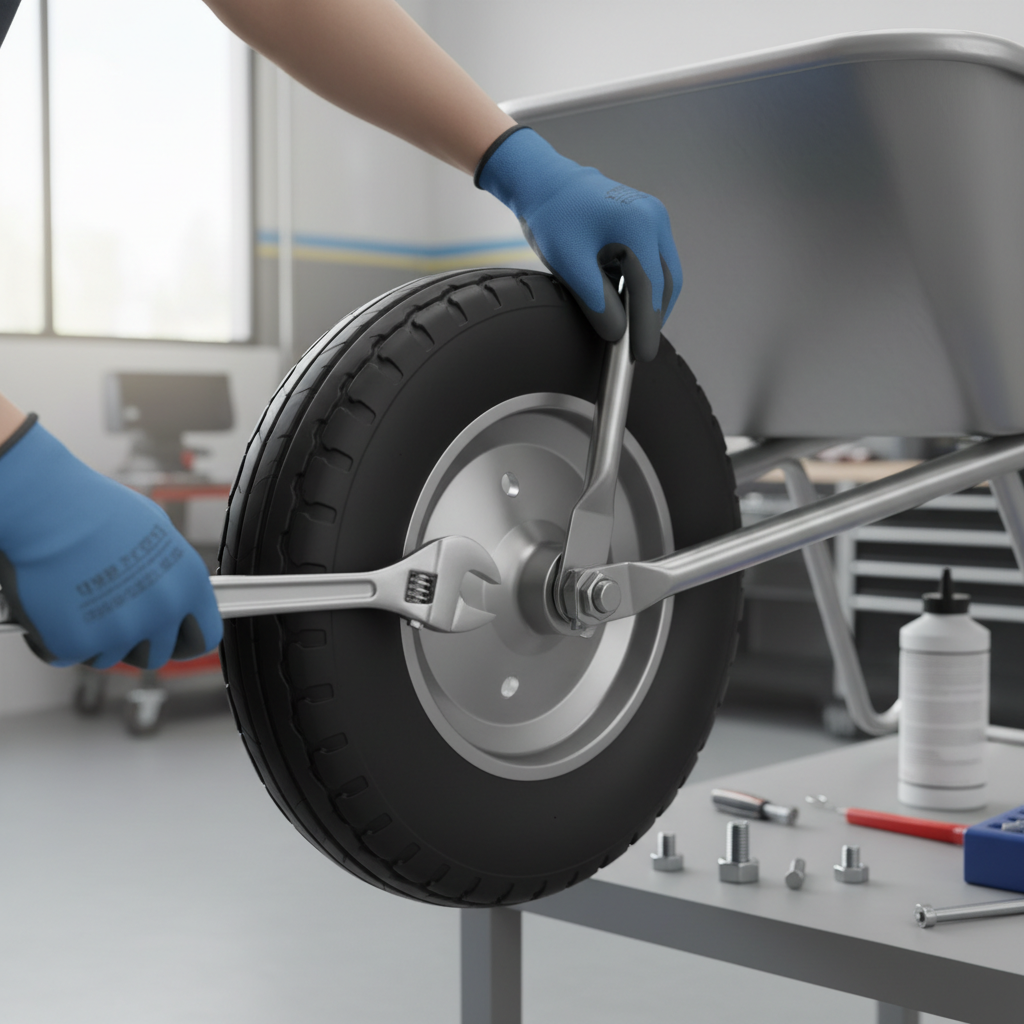
If the wheel binds after tightening, that’s not “normal break-in,” it usually means the spacers are wrong or the fork is squeezing the hub.
Common mistakes and what to do instead
A wheelbarrow puncture proof tire can still disappoint if expectations are off. These are the patterns that show up again and again.
- Mistake: buying “universal fit” without measuring.
Do this: match rim size, hub length, bore, and offset, then buy. - Mistake: assuming heavier always means better.
Do this: check load rating and tread design, too much rolling resistance can make work feel harder. - Mistake: choosing airless for comfort-focused work.
Do this: if you move plants or long distances, consider pneumatic with sealant and a higher-quality tube. - Mistake: ignoring bearings.
Do this: upgrade to sealed bearings if you work in mud, sand, or wash-down environments.
According to CPSC (general consumer product safety guidance), product instructions and proper assembly help reduce accident risk. For wheelbarrows, that often comes down to stable wheel fitment and hardware that stays tight without binding.
When it makes sense to ask for help
If your wheelbarrow frame looks bent, the wheel rubs no matter what spacers you use, or the axle hole seems worn oval, it may be smarter to take the wheelbarrow to a local hardware store or repair shop and match parts in person. For jobsite use, your safety team or a qualified mechanic can advise on load handling and maintenance practices, especially if the wheelbarrow carries heavy materials on slopes.
Conclusion: picking a setup you won’t regret
A wheelbarrow puncture proof tire is usually the right call when flats keep interrupting work and the terrain is full of thorns or debris. If comfort, traction, and smoother rolling matter more, a tougher pneumatic tire with sealant can be a better day-to-day experience.
If you want the simplest next step, measure your current wheel specs, decide whether you can live with a firmer ride, then buy based on compatibility and load rating rather than marketing terms.
FAQ
Are airless wheelbarrow tires really puncture proof?
In most cases, yes in the sense that they don’t rely on air, so nails and thorns won’t cause a flat. They can still wear down, crack over time, or develop hub/bearing issues, so “maintenance-free” can be overstated.
Will an airless tire make my wheelbarrow harder to push?
Sometimes. A firmer tire can increase rolling resistance on soft ground, and some solid tires feel heavier. On debris-strewn hard surfaces, though, many people find the consistency worth it.
What size is the most common wheelbarrow puncture proof tire?
Many wheelbarrows use an 8-inch rim size marked 4.80/4.00-8, but hubs and bearing bores vary. Treat size marking as step one, then confirm hub length and axle diameter.
Can I put a “flat-free” tire on any wheelbarrow?
Not automatically. Clearance, hub offset, and bore size can block a clean fit. If your frame is narrow or your wheel is offset, verify those dimensions before ordering.
Is tire sealant a good alternative to going airless?
For small punctures, it can help a lot, especially in landscaping work. It won’t reliably solve sidewall cuts, valve leaks, or badly cracked tubes, and it does add mess during repairs.
Do I need sealed bearings for an airless wheel?
Not always, but sealed bearings tend to hold up better in wet soil, sand, or frequent wash-down. If your current wheel squeaks, wobbles, or binds, bearings are worth attention.
Why does my wheel wobble after replacing the tire?
Usually it’s spacing or hardware alignment: missing washers, wrong hub length, or overtightening that binds one side. Less commonly, the axle is bent or the fork arms are not parallel.
If you’re trying to stop flats without guessing, a good approach is to list your terrain, typical load weight, and wheel measurements, then compare a few options side by side. If you want a more hands-off solution, look for an airless wheel assembly that matches your hub and bore so you replace the whole unit and avoid fitment surprises.