The best dust mask for sanding and cutting is the one that matches your dust type, fits your face without leaks, and stays comfortable long enough that you actually keep it on.
If you’ve ever finished sanding drywall or cutting MDF and felt that gritty throat burn, you already know the problem isn’t just “dust,” it’s fine particles that hang in the air, get past sloppy seals, and build up over a long weekend of projects. Picking a mask becomes less about brand hype and more about filtration class, fit, and whether you need oil-resistance or nuisance-odor relief.

This guide stays practical, because the “right” answer changes with your material, tool, and tolerance for heat and fogging. I’ll break down the mask types that actually matter in 2026, give a quick self-check to choose fast, then share usage tips that often make a bigger difference than upgrading filters.
What makes sanding and cutting dust tricky (and why mask choice matters)
Sanding and cutting create a mix of particle sizes, and the stuff that causes the most annoyance often isn’t the visible cloud. The finer particles can linger, ride air currents, and sneak in through small gaps around the nose or cheeks.
- Drywall and plaster dust: very fine, floats easily, tends to find leaks around the nose bridge.
- Wood dust: varies by species and tool, sanding produces finer dust than many saw cuts. Some woods can be more irritating for certain people.
- MDF/particle board: fine dust plus binder resins, many people find it harsher to breathe even with “decent” masks.
- Concrete/stone cutting: higher-risk dust profile, often pushes you toward better sealing and higher filtration. According to NIOSH guidance on respiratory protection, choosing an appropriate respirator depends on the hazard and exposure conditions.
One more real-world factor: you can buy an excellent filter and still get exposed if the mask doesn’t seal, or if it’s so uncomfortable you keep pulling it down “just for a minute.” That’s why comfort is a safety feature, not a luxury.
Dust mask types in plain English (N95, P95, P100, elastomeric)
When people search for the best dust mask for sanding and cutting, they often mean “something better than a floppy paper mask.” Here’s the useful breakdown.
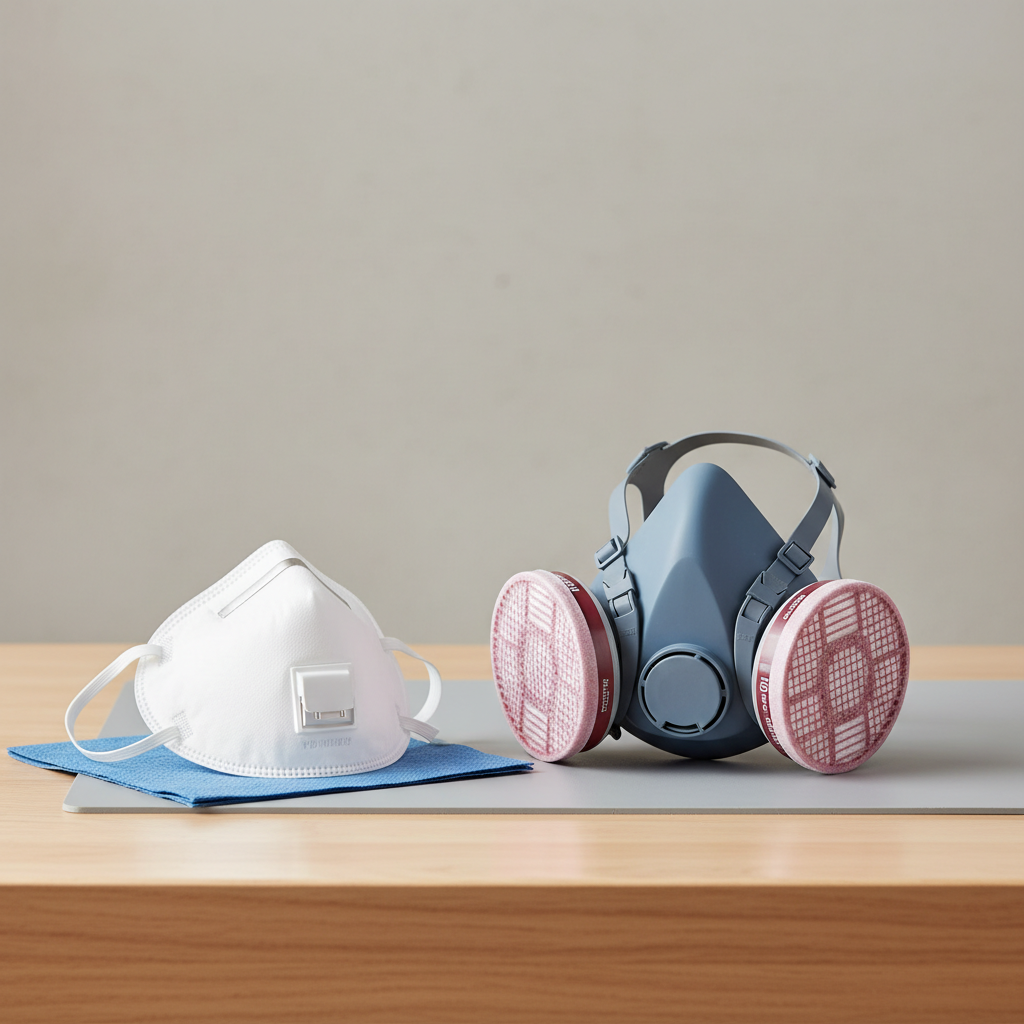
Disposable filtering facepieces (N95/N99/N100)
These are the common cup or fold-flat masks. In many DIY sanding situations, an N95 that fits well can be a meaningful step up from basic nuisance masks. The catch is fit and consistency, since these rely on a good face seal and proper placement every time.
- Pros: light, simple, easy to stash, no maintenance.
- Cons: fit varies a lot by face shape, straps fatigue, heat buildup can be annoying.
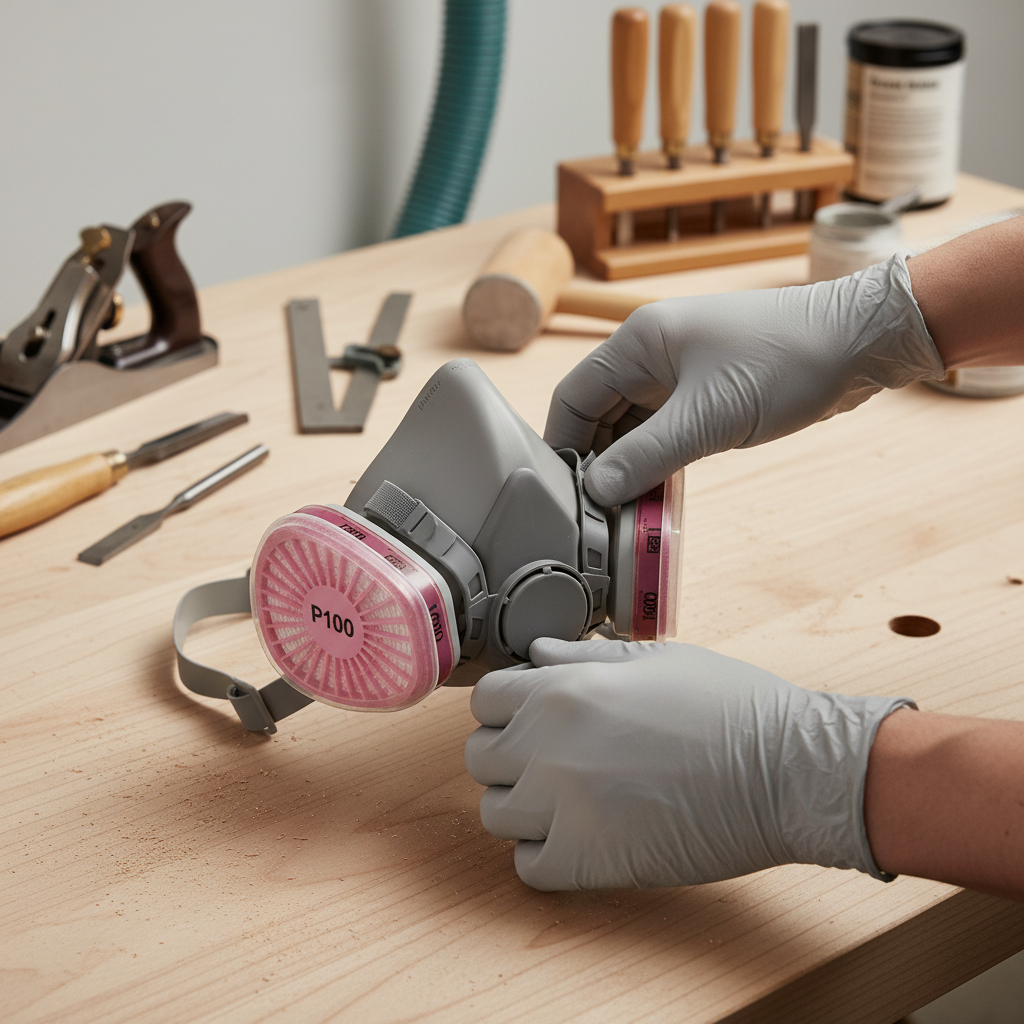
Elastomeric half-face respirators with replaceable filters (often P100)
These are rubber/silicone masks with cartridges or pancake filters. For repeated sanding and cutting sessions, they’re often the “it finally feels sealed” upgrade. Many people also find breathing easier because of larger filter area.
- Pros: better seal potential, long-term value, filters available for different hazards.
- Cons: bulkier, needs cleaning and storage, can interfere with some safety glasses.
What the letters generally mean (the practical version)
- N: not oil-resistant, commonly fine for typical wood/drywall dust situations.
- P: oil-proof, often paired with better filtration options like P100.
- 100: higher filtration rating than 95, useful when dust is very fine or exposure is frequent.
For typical homeowners, the decision usually narrows to: a well-fitting N95 disposable versus a half-face respirator with P100 filters. If you only sand a couple shelves twice a year, disposable can be enough. If you sand, cut, and sweep dust weekly, elastomeric tends to feel more “set and forget.”
Quick self-check: which mask class fits your project?
If you want the best dust mask for sanding and cutting for your own situation, answer these honestly, not optimistically.
- How often do you sand/cut? Once a month is different from three weekends in a row.
- Where do you work? Small basement room, garage with door open, or outdoors.
- What material? Drywall and MDF tend to push you toward better sealing.
- Do you wear glasses? Fogging and nose seal become a big deal.
- Do you have facial hair? Even short stubble can reduce seal on many masks.
- Are you already using dust collection? If not, your mask has to do more work.
Fast pick guide (not a substitute for a site-specific safety plan):
- Light DIY sanding, open airflow: quality N95 with good nose foam and strong straps.
- Drywall sanding, MDF cutting, frequent sessions: consider a half-face respirator with P100 filters.
- Concrete/stone cutting or unknown dust profile: usually worth stepping up and also reviewing local safety requirements. According to OSHA, employers must evaluate respiratory hazards and implement appropriate protection; if you’re working professionally, follow your program and training.
Side-by-side comparison table (what to buy for real life)
This table won’t pick a single winner for everyone, but it will keep you from paying for features you won’t use.
| Option | Good for | Watch-outs | What to look for |
|---|---|---|---|
| Disposable N95 (quality model) | Occasional sanding, basic shop tasks | Fit inconsistency, strap fatigue, fogging | NIOSH approval, adjustable nose piece, nose foam, strong headbands |
| Disposable with valve | Hot environments, long sanding sessions | Not ideal where source control matters; some job sites restrict valves | Comfortable valve design, solid seal, compatible eyewear |
| Half-face elastomeric + P100 | Drywall/MDF, frequent cutting & sanding | Bulk, cleaning, storage | Soft silicone seal, easy filter swaps, available sizes |
| Half-face + combo cartridges | Dust plus odors (finishes, mild solvents) | Heavier, more expensive cartridges | Correct cartridge type for your chemical, change-out plan |
How to get a real seal (the part most people skip)
Fit is where “good mask” becomes “good protection.” Even the best dust mask for sanding and cutting performs poorly when air takes the easy path around the edges.
A simple seal check you can do at home
- Put the mask on, then adjust the nose area slowly, pressing from center outward.
- Inhale sharply: the mask should pull in slightly and stay snug.
- Exhale: feel for air leaking near eyes, cheeks, and chin.
- If you get consistent leaks, try a different size/model, not just “tighter straps.”
For elastomeric respirators, many brands offer multiple sizes. That matters more than people expect. A small face in a large mask rarely “tightens into” a proper seal, it just gets uncomfortable.
Glasses fogging is usually a fit clue
If your glasses fog every time you breathe out, air is likely escaping upward. Sometimes a better nose foam and reshaping the nose clip fixes it. Other times you need a different mask shape.
Practical buying picks: what “best” looks like in 2026
I’m not going to pretend there’s one perfect model for every face. Instead, here’s what tends to separate the masks people rebuy from the ones that end up in a drawer.
- Verified certification: look for NIOSH-approved markings on disposables and reputable respirator lines for reusable models. According to CDC resources on respirators, certified products and proper fit are key for intended performance.
- Comfort features that matter: soft nose foam, headbands (often more stable than ear loops), breathable filter media, and a shape that doesn’t crush your lips.
- Filter availability: for half-face respirators, make sure replacement P100 filters are easy to find and not a weird proprietary dead-end.
- Low-profile filters: “pancake” P100 filters can feel less bulky when you’re leaning over a bench or using a face shield.
- Compatibility: check that it plays nicely with safety glasses, hearing protection, and face shields, because you’ll wear all of it together.
Key takeaway: if you’re doing repeated drywall sanding or MDF cutting, a half-face respirator with P100 filters is often the most confidence-inspiring upgrade, because you get stable sealing and predictable filter performance over time.
Use it like a pro: wearing, maintaining, and replacing
Buying is the easy part. Getting consistent protection comes from habits that don’t feel complicated.
Wearing tips that prevent the “constant adjustment” problem
- Put it on before you start generating dust, not after the first cut.
- Position straps correctly: one high on the crown, one lower on the neck for many designs.
- If you talk a lot while working, choose a mask that stays sealed while jaw moves, otherwise it creeps.
Replacement and cleaning basics
- Disposable masks: replace when breathing feels harder, the mask deforms, or straps lose tension.
- P100 filters: many people replace when breathing resistance increases or filters look loaded, but follow the manufacturer guidance for your specific filter.
- Elastomeric facepiece: wipe down after dusty sessions, store in a clean bag or box so the seal doesn’t pick up grit.
If you notice dizziness, tight chest, wheezing, or unusual symptoms during dusty work, pause and consider talking with a medical professional, especially if you have asthma or other respiratory conditions.
Mistakes that make good masks feel “useless”
- Assuming any “dust mask” is the same: nuisance masks and certified respirators aren’t interchangeable in performance.
- Wearing it with gaps: a small leak can be the whole story, especially with fine dust.
- Relying on the mask to replace ventilation: use dust extraction, fans, and cleanup methods that avoid re-suspending dust.
- Keeping a disposable too long: stretched straps and crushed nose foam quietly ruin fit.
- Facial hair: many respirators can’t seal well over a beard. If shaving isn’t an option, you may need to explore other approaches with a safety professional.
Conclusion: the “best” choice is the one you’ll wear every time
The best dust mask for sanding and cutting usually comes down to two winners: a well-fitting, certified N95 for occasional projects, or a comfortable half-face respirator with P100 filters for frequent sanding, drywall work, or MDF cutting. If you do one thing today, do a quick seal check and stop treating fogging and leaks as “normal.”
If you want a simple next step, pick one mask style, buy a small pack or a starter respirator kit, and test it on a short sanding session with your usual eye protection. If it stays sealed and you forget you’re wearing it, you’re close to your best option.