shovel drain spade narrow is the phrase most people end up searching after they try digging a trench with a regular round-point shovel and realize it keeps widening the cut, collapsing the sides, and wasting time.
If you’re laying a drain line, running irrigation, or cleaning out a narrow trench, the tool choice matters more than most DIY guides admit, because trench width and sidewall stability affect how easy it is to place pipe, maintain slope, and backfill without voids.
This guide breaks down what a narrow drain spade shovel really is, when it beats a trenching shovel, what to look for before you buy, and how to use it without turning your “quick trench” into an all-day re-dig.
What a “narrow drain spade” is (and what it isn’t)
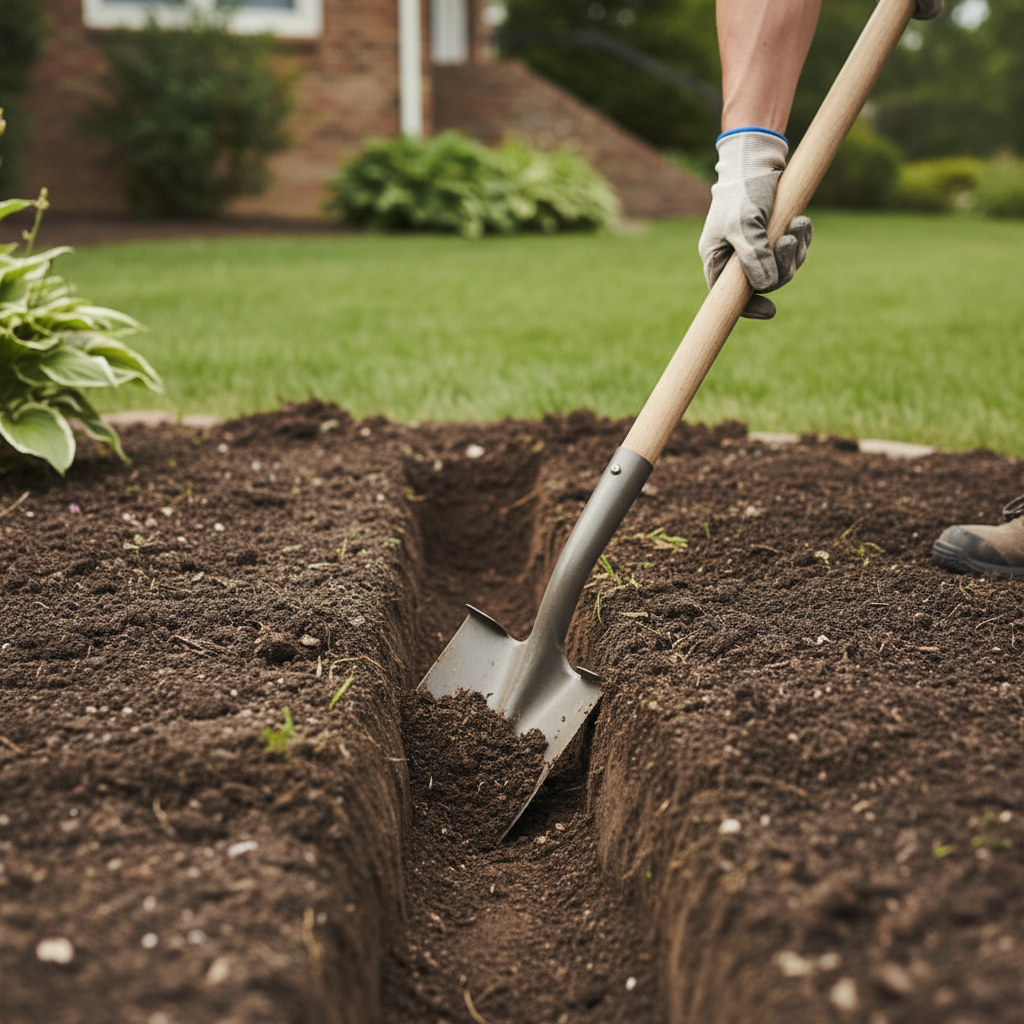
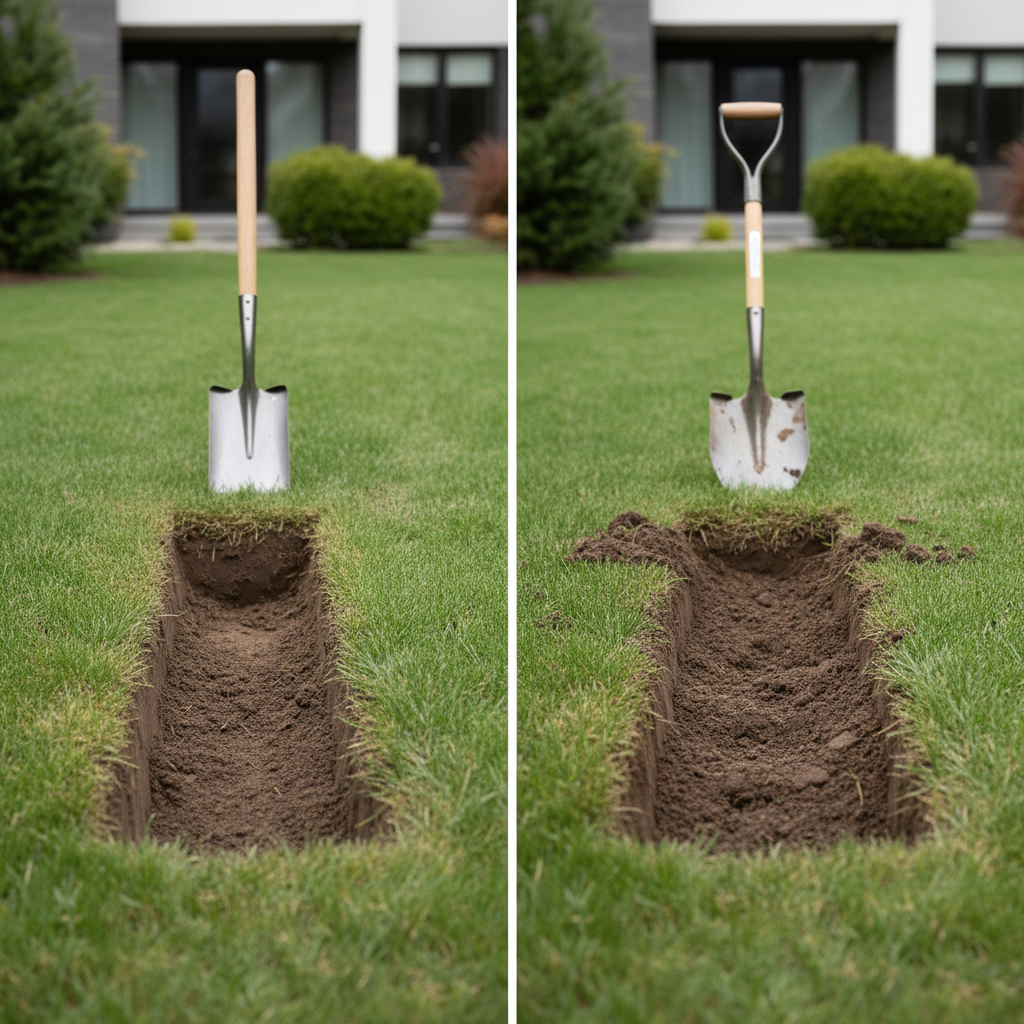
A narrow drain spade is a long, slim-bladed shovel designed to dig or clean tight trenches with less side-to-side disturbance. The blade is typically narrower than a standard spade, and it’s often shaped to “slice” downward rather than scoop wide.
What it’s not: a full-on trenching shovel for deep, narrow trenches in hard soil all day long, and not a post-hole digger replacement. You can trench with it, but the sweet spot is precision work, not maximum volume.
Common jobs where it shines
- French drains and downspout drain lines where you want a tidy trench
- Irrigation laterals and low-voltage landscape cable runs
- Cleaning and re-establishing an existing trench without widening it
- Working between plants, edging, or near hardscape where space is limited
Why a narrow blade can save hours on a drain project
The biggest “hidden cost” in drain work is rework: trenches that get too wide, lose grade, or cave in. A narrow drain spade reduces how much soil you disturb, so the trench holds shape better and backfills cleaner.
It also improves control. With a slimmer blade you can place cuts exactly where you want them, especially when you’re threading a line between roots or staying a safe distance from a walkway.
Real-world benefits people notice
- Cleaner sidewalls for easier bedding and pipe placement
- Less backfill volume, which usually means less tamping and fewer sink spots later
- Better grade control because you’re not constantly “fixing” an over-wide bottom
Quick self-check: do you actually need a narrow drain spade?
Not everyone does. If you’re excavating a big area or moving a lot of material, a wider shovel or a mattock might be the better first move. A shovel drain spade narrow tool earns its keep when precision matters.
- You need a trench that stays narrow, roughly consistent width
- You’re working near roots, edging, fences, or pavers
- You’ll set pipe, conduit, or cable and want a neater backfill
- Your current shovel keeps collapsing the sides as you pry
- You’re cleaning an existing drain trench rather than starting from scratch
If none of those feel true, you might still want one, but it won’t feel like a game-changer.
Buying guide: what to look for in a narrow drain spade shovel
Most narrow drain spades look similar online, but in use they feel very different. The “right” choice depends on soil type, trench depth, and how long you’ll be working at a stretch.
Key specs that actually matter
- Blade width: narrower helps precision, but ultra-narrow can feel slow in loose soil
- Blade length: longer blades reach depth faster, but can bind in clay
- Steel gauge and edge: thicker steel pries better, a sharp edge slices sod cleaner
- Handle length: longer reduces bending, shorter gives control in tight spots
- Grip: D-handle for control, straight handle for reach and leverage
Drain spade vs trenching shovel vs standard spade (quick table)
| Tool | Best for | Strengths | Trade-offs |
|---|---|---|---|
| Narrow drain spade | Precise narrow trenches, cleanup | Control, clean sidewalls, less disturbance | Slower for bulk digging |
| Trenching shovel | Deeper, narrow trenches | Depth, efficient trench shaping | Less versatile for general yard work |
| Standard spade / round-point | General digging and moving soil | Fast excavation, easy to find | Wider trench, more cleanup |
How to dig a clean drain trench with a narrow drain spade
Technique matters as much as the tool. A narrow blade rewards straight-down cuts and controlled lifts, and it punishes twisting and prying like you would with a heavier spade.
Step-by-step workflow that stays efficient
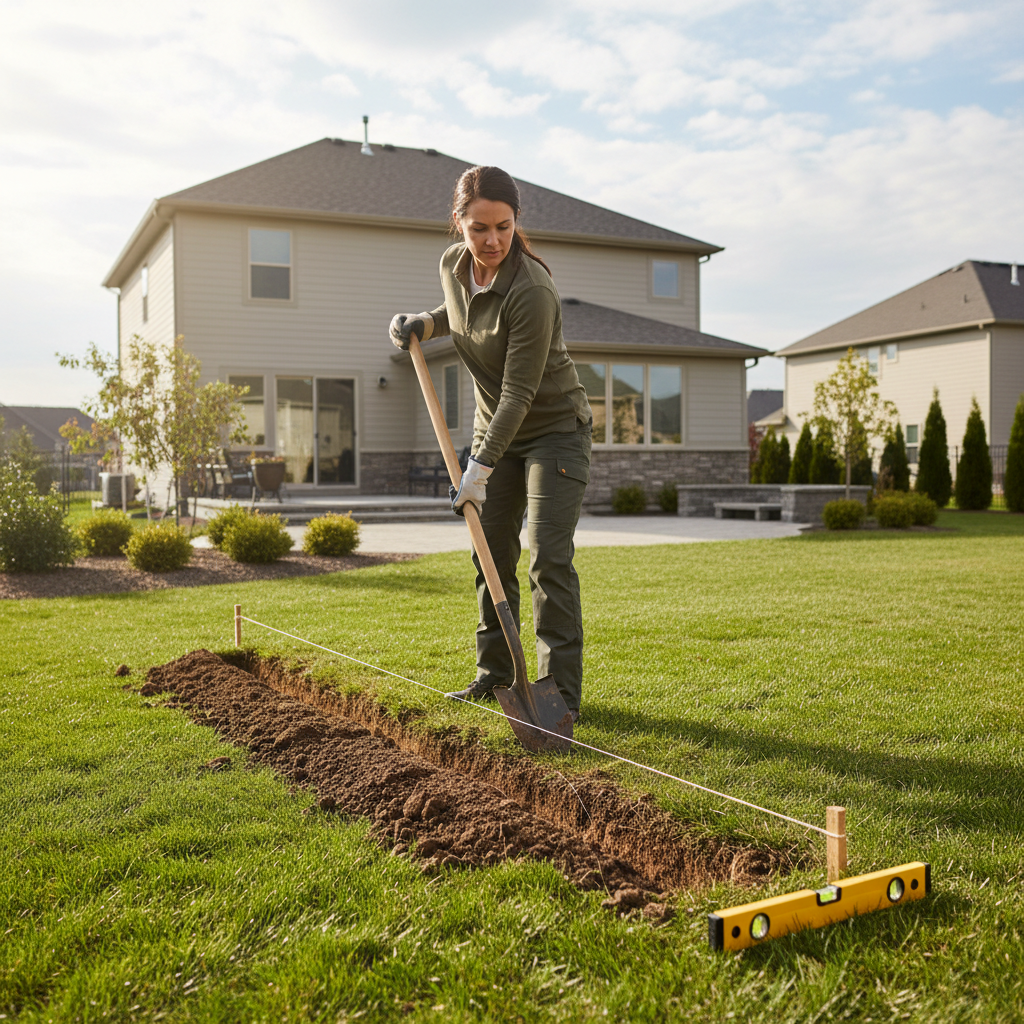
- Mark your line with paint or a string, then cut the sod first if you have turf.
- Open a starter slot with a few vertical chops, don’t try to lever out a huge plug immediately.
- Dig in passes: take the top layer, then deepen, keeping the trench bottom consistent.
- Check grade often with a level or line. Drain issues often come from small dips, not big mistakes.
- Clean the bottom using the narrow blade like a scraper so bedding sits evenly.
For utilities, don’t guess. In the U.S., calling 811 before you dig is standard practice, and in many situations it’s the difference between a normal project and an emergency. According to Common Ground Alliance, contacting 811 helps reduce damage to underground utilities and improves jobsite safety.
Mistakes that make a narrow trench harder than it needs to be
Most frustration comes from trying to use a narrow drain spade like a pry bar. It can pry a bit, sure, but that’s not the design strength. If you keep torquing the handle, you’ll widen the trench and fatigue your wrists.
- Over-wetting soil: muddy walls slump, and your “narrow trench” turns into soup.
- Ignoring soil changes: sandy topsoil over clay behaves differently, adjust your bite size.
- Digging too deep too fast: deep narrow trenches bind the blade, then you start twisting.
- Skipping staging: throw spoil to one side consistently so you’re not stepping into your own mess.
If you hit dense clay or lots of roots, it’s often faster to switch tools for five minutes than to fight it for an hour. A mattock, a root saw, or even a small trenching spade can be the “unlock,” even if you prefer the narrow blade for the rest.
When to consider renting equipment or calling a pro
A shovel drain spade narrow setup is ideal for many homeowner jobs, but it has limits. If you’re going deep, long, or near critical utilities, it’s reasonable to step back and change the plan.
- Long runs: if you’re trenching dozens of yards, a trencher rental may be cheaper than your weekend.
- Deep trenches: trench safety becomes a real concern, cave-ins can happen even in yards.
- Near gas/electric/service lines: even careful digging can go wrong, get markings and consider a professional.
- Drain design uncertainty: if you’re not sure about slope, outlet, or soil percolation, a drainage contractor can confirm the plan.
For safety and compliance guidance, it’s smart to check local requirements. According to OSHA, excavation and trenching work has recognized hazards, and protective measures depend on depth and soil conditions. If your project starts approaching “real trenching,” getting professional input is more than reasonable.
Key takeaways before you buy or dig
A narrow drain spade is one of those tools that feels “too specific” until you use it on a job that demands clean lines. If your goal is a tidy trench for a drain line, irrigation, or cable, it’s usually a better fit than a general shovel.
- Choose narrow for control, not for speed moving lots of dirt
- Cut, then deepen, and keep checking grade instead of fixing it later
- Call 811 when there’s any chance of buried utilities
If you want one action step: pick your trench width based on what you’re installing, then match the blade to that width so you’re not “digging twice” by accident.
FAQ
What is a narrow drain spade shovel used for?
It’s commonly used for digging or cleaning narrow trenches for drainage pipe, irrigation lines, and landscape wiring, especially where you want less disturbance and cleaner trench walls.
Is a drain spade the same as a trenching shovel?
They overlap, but many drain spades prioritize control and general trench cleanup, while trenching shovels tend to be optimized for deeper, continuous trench work. The difference shows up most in blade shape and how it moves soil.
How narrow should my trench be for a drain line?
It depends on pipe size, bedding material, and local practice. Many people aim for “just wide enough to place and adjust the pipe,” because extra width increases backfill and settling risk.
Can a narrow drain spade handle clay soil?
Often yes, but bite size matters. In dense clay, shorter, controlled cuts work better than trying to pry out big chunks, and a second tool for loosening can speed things up.
Do I need to sharpen a drain spade?
A lightly sharpened edge can slice sod and roots cleaner, but it doesn’t need to be razor sharp. If you do sharpen, wear eye protection and keep the edge consistent rather than thin.
What handle style is better, D-handle or straight?
D-handles feel more controlled for precision trenching and cleanup, while straight handles can offer more reach. If you expect lots of start-stop work in tight spaces, many homeowners prefer a D-grip.
Is it safe to dig a trench by hand near utilities?
Hand digging can be safer than machinery, but it still carries risk. Get utilities marked via 811, dig carefully in the tolerance zone, and consider a professional if the layout is unclear or crowded.
If you’re trying to keep a trench tight and clean, and you’d rather not experiment with three different shovels to find what works, a narrow drain spade is usually the simplest upgrade to make the job feel predictable.