funnel set plastic metal is the kind of simple tool you only notice when you don’t have it—oil drips down a bottle, fuel splashes near a cap, or syrup strings across the counter. The right set makes pouring calmer, cleaner, and faster.
What trips most people up is that funnels aren’t one-size-fits-all. The liquid matters, the container opening matters, and the material matters—especially around fuel, solvents, hot liquids, or food contact. This guide helps you pick a practical set, use it safely, and avoid the common “why is this still leaking?” frustration.
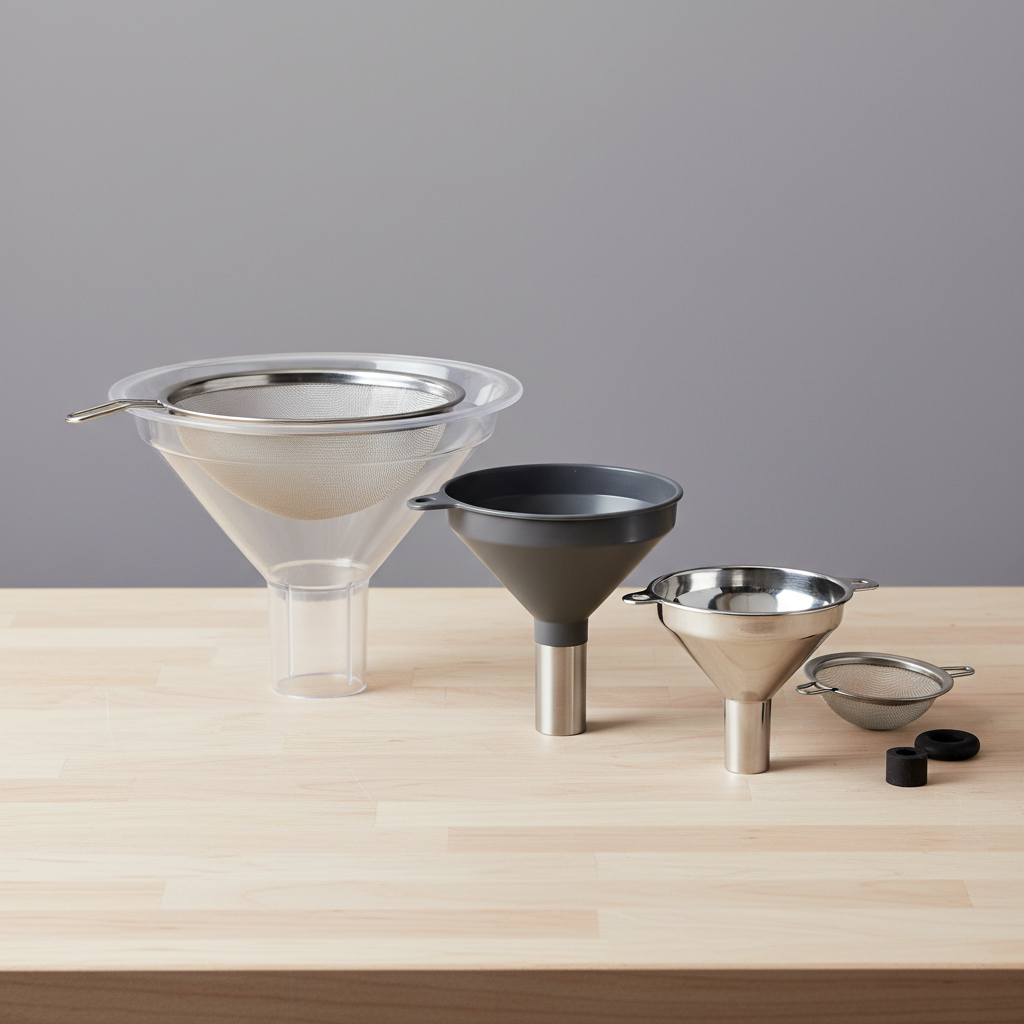
One more thing before you buy: a “set” can mean anything from three general-purpose funnels to a full kit with flexible spouts, mesh screens, and adapters. If you match the kit to your real use cases, you’ll stop re-buying funnels that live in a drawer.
Why people choose a plastic & metal funnel set (and where each material fits)
A mixed kit usually exists for a reason: plastic and metal behave differently under heat, chemicals, and daily wear. You’re not being picky—your use case actually changes what “good” looks like.
- Plastic funnels often feel easier for food prep and light household liquids, they’re typically quieter on glass, and they can be easier to store in nested stacks.
- Metal funnels tend to handle rougher handling, higher heat, and repeated cleaning, and they usually keep their shape better over time.
- Sets reduce improvising because you get multiple diameters, which is what prevents wobble and splash-back more than anything else.
According to the U.S. Food & Drug Administration (FDA), materials that contact food should be suitable for food-contact use, so if you plan to use the same funnel for food and automotive fluids, it’s smarter to separate them rather than “wash and hope.”
Quick self-check: what are you actually pouring?
Before you pick a funnel set plastic metal bundle, answer these in plain terms. It takes 30 seconds and saves you from buying the wrong kit.
A simple decision checklist
- Liquid type: cooking oil, vinegar, syrup, coolant, gasoline, transmission fluid, detergents, paint thinner.
- Temperature: room temp, warm, near-boiling. Hot liquids can warp some plastics and make a safe grip harder.
- Viscosity: thin (water/fuel) vs thick (honey/gear oil). Thick liquids need a wider stem to avoid burping.
- Container mouth: wide-mouth jar, narrow bottle, recessed car fill port, awkward angle under a hood.
- Cleanliness needs: food-safe only, shop-only, or you want two separate sets.
If you’re dealing with fuel or strong solvents, be cautious. Material compatibility can vary by exact plastic type and by chemical concentration, and when in doubt you’re better off using a metal funnel dedicated to that job or checking the manufacturer’s compatibility notes.
Choosing the right funnel sizes and shapes (what matters more than you think)
Most “spills” are really stability problems: the funnel sits too high, the stem is too narrow, or the angle forces the liquid to hit a wall and splash.
Practical features that earn their keep
- Wide bowl + short drop for thick liquids, it reduces glugging and air lock.
- Long, narrow spout for deep fill ports (common in automotive), but look for a vented design so air can escape.
- Flexible extension when the fill opening isn’t vertical or you can’t get a straight line of sight.
- Strainer screen for catching debris when refilling oils in a shop setting, but skip it for syrupy kitchen pours unless you enjoy cleaning tiny mesh.
- Handle or finger tab if you pour often, it’s small but it changes control a lot.
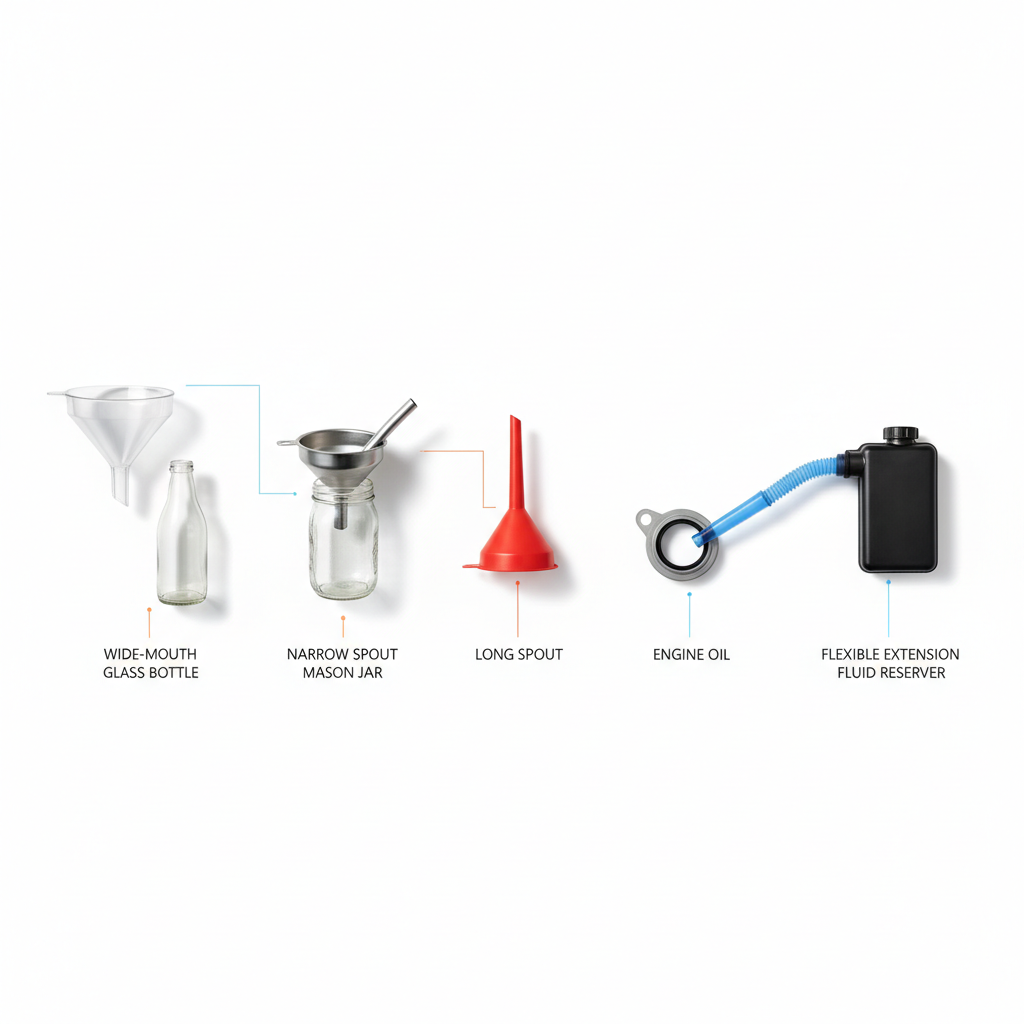
If you only remember one rule: match the funnel stem diameter to the neck so it seats securely, then pick bowl size based on how fast you want to pour. People often do the opposite and blame the funnel.
Plastic vs metal funnels: a realistic comparison table
Here’s the quick, honest tradeoff view. Specific products vary, but these tendencies hold in a lot of households and garages.
| Category | Plastic funnel | Metal funnel |
|---|---|---|
| Best for | Kitchen liquids, light household use | Shop use, repeated cleaning, higher heat tolerance |
| Durability | Can scratch or warp depending on plastic and heat | Typically holds shape better over time |
| Chemical compatibility | Varies widely by plastic type, check manufacturer notes | Often more forgiving, still avoid harsh corrosion scenarios |
| Cleaning | Usually easier for quick rinses, watch for staining | Good for deep cleaning, may show water spots |
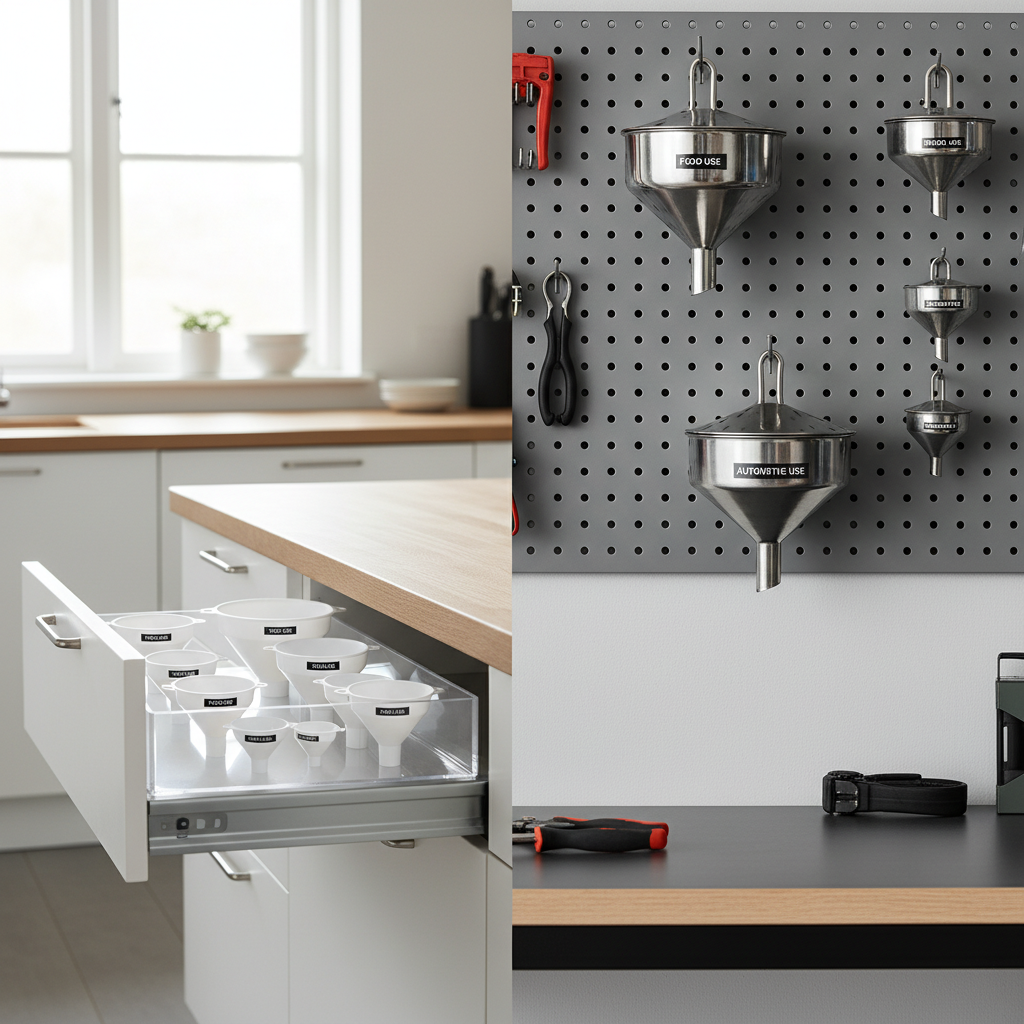
| Food vs non-food separation | Easy to color-code if you own multiple | Better as “dedicated shop funnel” to prevent mix-ups |
For many buyers, the best answer is boring: use plastic for food, use metal for automotive. Mixing tasks is where mess and safety concerns creep in.
How to pour cleaner: a step-by-step method that reduces spills
Even a solid funnel set plastic metal kit won’t save a rushed pour. The goal is to control air and prevent the funnel from shifting.
Technique that works in most situations
- Stabilize first: seat the stem into the opening, then lightly brace the funnel with two fingers or the handle, don’t hold it only at the rim.
- Start slow: a thin stream at the beginning helps “prime” the flow and confirms alignment.
- Mind the air: if the container mouth seals around the stem, tilt slightly or use a vented/offset spout so air can escape.
- Pour in pulses for thick fluids: short pauses let trapped air bubble up instead of burping over the rim.
- Don’t overfill the bowl: keep the liquid level below halfway if the container below drains slowly.
In automotive use, work on a cool engine when possible. Hot surfaces plus spilled fluids can be risky, and if you’re unsure what’s safe for your vehicle, it’s reasonable to consult a qualified mechanic.
Cleaning, storage, and cross-contamination rules (the part people skip)
Most funnel complaints show up after the first use: lingering odor, residue, sticky drips in drawers. The fix is mostly habits, not fancy gear.
Keep it simple, keep it separated
- Label by job: “Food,” “Oil,” “Fuel” on a small piece of tape works, even on metal.
- Rinse immediately: especially for sugar, syrup, or oils, dried residue turns cleaning into a chore.
- Use warm soapy water for food funnels: then air-dry completely to prevent musty smells.
- For shop funnels: follow the fluid manufacturer guidance for cleanup, and dispose of oily waste properly.
According to the U.S. Environmental Protection Agency (EPA), used oil should be handled and disposed of responsibly, so if your funnel is covered in motor oil, treat the cleanup materials and drips with that in mind rather than rinsing everything into a sink.
Common mistakes to avoid (so you don’t blame the funnel)
These are the repeat offenders. Fixing them usually makes any decent set feel “better” overnight.
- Using one funnel for everything: odors and residue linger, and food safety becomes a question mark.
- Picking a tiny stem for thick liquids: it slows draining, the bowl fills, then it overflows.
- Pouring too fast too soon: splash-back happens before you can react.
- Storing wet funnels: water trapped in stems leads to funk and spotting.
- Ignoring fit: if the funnel wobbles, it will slip at the worst moment.
Key takeaways and a practical buying checklist
If you want a set that actually gets used, focus on fit, separation, and the liquids you pour most. Extra accessories help only when they match your routine.
- Buy for your top two jobs, usually kitchen + automotive, and keep them separate.
- Look for 3–5 sizes with noticeably different stem diameters, not just different bowl widths.
- Prioritize stability with handles, tabs, or shapes that sit securely in narrow openings.
- Check temperature and compatibility notes if you pour hot liquids, fuel, or strong chemicals.
Conclusion: a well-chosen funnel set plastic metal kit is less about “having funnels” and more about removing small daily friction—cleaner transfers, fewer wasted fluids, and less cleanup. If you’re upgrading, start by matching the funnel to the container mouth and the liquid thickness, then build the set around that reality.
If you’re ready to act, pick one dedicated food funnel and one dedicated shop funnel today, then add sizes only where you’ve actually had spills.
FAQ
What is the best way to use a plastic and metal funnel set without making a mess?
Seat the stem firmly, start with a slow stream, and avoid filling the bowl faster than the container can drain. Thick liquids benefit from short pauses so trapped air can escape.
Can I use the same funnel for cooking oil and motor oil if I wash it well?
It’s not a great habit. Residue and odor can cling in seams and stems, and you’re left guessing about contamination. Two dedicated funnels usually solves the issue cheaply.
Is metal always safer than plastic for gasoline or solvents?
Often it’s more durable, but “safer” depends on the exact chemical and the funnel design. When you’re working with fuel, use a funnel made for that purpose and follow product guidance, and if you’re uncertain, ask a professional.
Why does my funnel overflow even when I pour slowly?
Usually it’s an air-lock or a stem that’s too narrow for the fluid. Try a wider spout, a vented design, or tilt slightly to let air escape.
What funnel size should I buy for narrow bottle openings?
Look for a small-diameter stem that fits securely into the neck, plus a bowl large enough to pour comfortably. A long spout helps, but only if it still vents.
How do I clean funnels used for automotive fluids?
Wipe excess fluid first, then clean following the fluid manufacturer’s guidance. Handle used oil responsibly and avoid washing oily residue into household drains.
Do I need a funnel with a strainer screen?
If you refill from containers that might have debris, a strainer helps. For kitchen syrups or thick sauces, it can be more trouble than it’s worth because cleanup takes longer.
If you’re trying to choose a set and you already know your main use case, it can be easier to start from the container openings you pour into and work backward to the funnel sizes, then pick plastic for food and metal for shop tasks so you don’t have to think twice later.