how to cut drywall with a hand saw comes down to two things: keeping the panel supported so it doesn’t snap, and using the right cutting sequence so the paper face stays clean.
If you’ve ever tried to “just saw it out” and ended up with a fuzzy edge, a chipped corner, or a hole that’s mysteriously too big, you’re not alone. Drywall looks simple, but the paper layers and gypsum core behave differently depending on how you start and how you finish.
This guide walks through the practical way most DIYers succeed: when to score first versus when to saw first, how to cut outlets and boxes accurately, and what to do when the cut goes sideways. You’ll also get a quick tool table and a short checklist so you can decide your approach in a minute.
What makes drywall tricky to cut with a hand saw
Drywall is basically a brittle core wrapped in paper. The saw teeth can tear the paper, and once the paper tears past your line, the edge starts looking ragged.
The other issue is support. If the panel flexes while you cut, it can crack ahead of the saw line. That crack might stay hidden until you lift the sheet, then it suddenly breaks where you didn’t plan.
- Paper face tears when you start cutting too aggressively or from the wrong side.
- Gypsum crumbles if the sheet vibrates or you force the saw on long cuts.
- Openings end up oversized because it’s easy to “wander” with a jab saw when you’re rushing.
According to OSHA, controlling dust and wearing appropriate PPE matters on construction tasks, and drywall cutting is one of those jobs where a little caution usually pays off.
Tools and materials you actually need (and what each one is for)
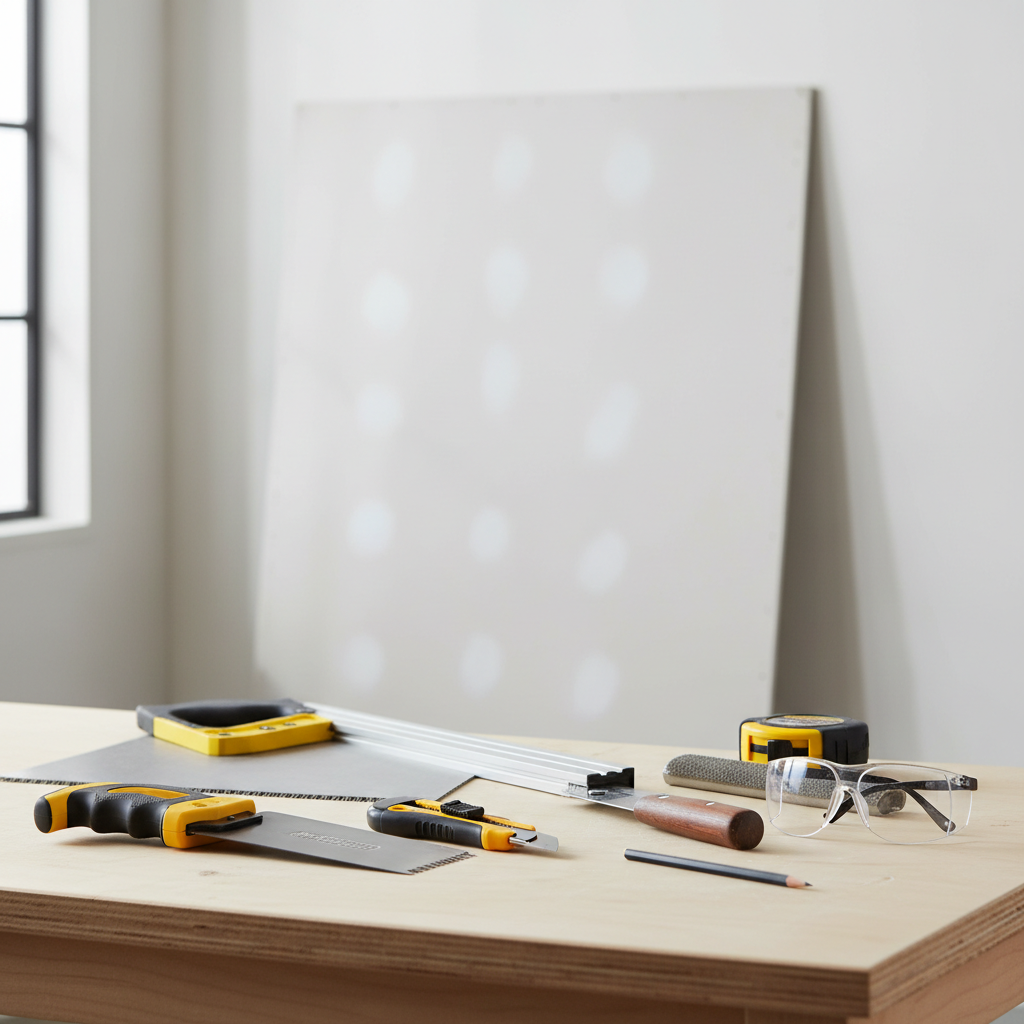
You can cut drywall with just a hand saw, but the cleanest results usually come from pairing a saw with a knife and a rasp. Here’s the simple breakdown.
| Tool | Best use | Why it helps |
|---|---|---|
| Drywall jab saw | Outlet boxes, small openings, cutouts in the middle of a sheet | Pointed tip starts a hole without drilling |
| Fine-tooth hand saw | Long straight cuts on supported sheet | Less tearing on the paper face |
| Utility knife | Scoring the face paper before sawing | Reduces blowout and frayed edges |
| Drywall square / straightedge | Marking straighter lines quickly | Helps keep cuts true, fewer gaps at seams |
| Rasp or sanding block | Edge cleanup | Makes tight fits without re-cutting |
| Mask + safety glasses | Any cut | Less irritation from dust and crumbs |
Key point: for many cuts, the knife does the “precision” and the saw does the “speed.” If you rely on the saw for everything, edges usually look worse.
Quick self-check: which cutting method should you use?
Before you start, decide whether you’re doing a long edge cut, trimming a few inches, or cutting an opening. The method changes.
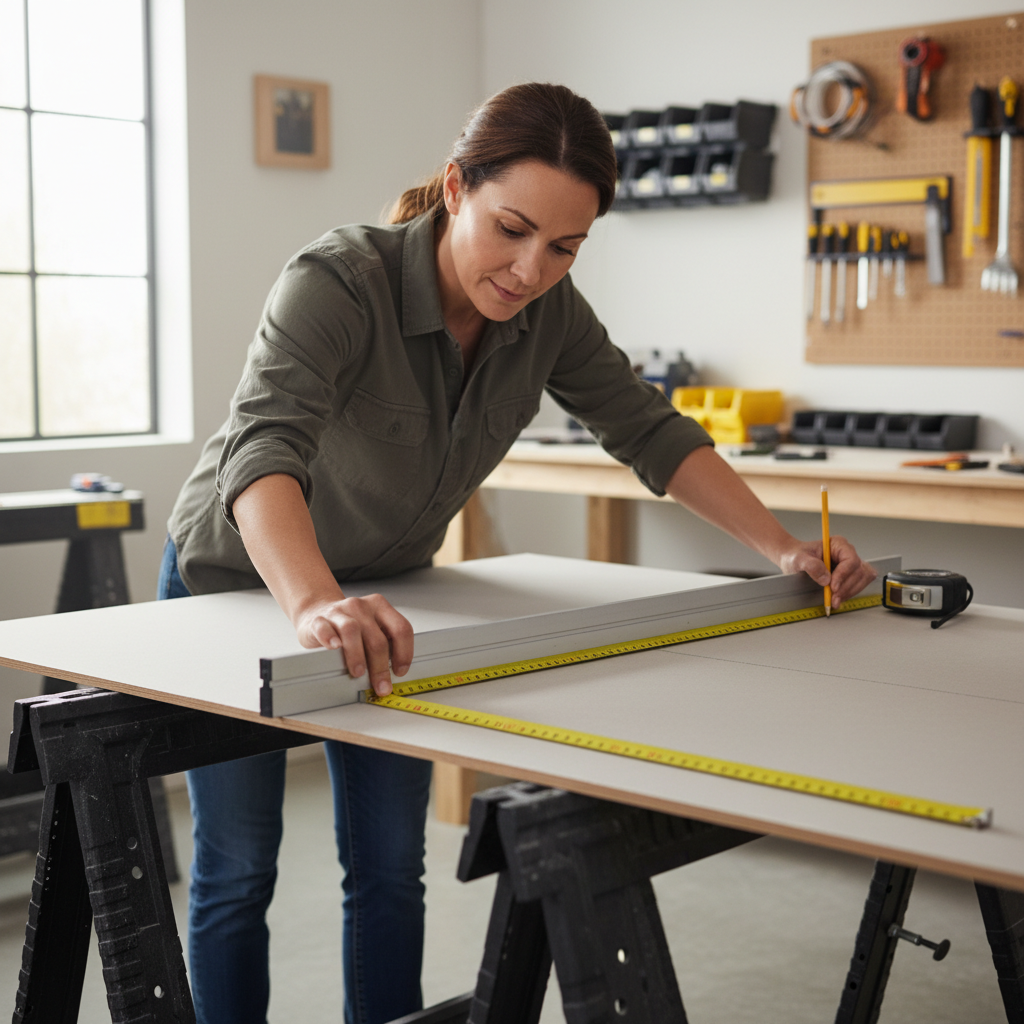
- Long straight cut (rip or crosscut): score with a utility knife, snap, then cut the back paper. Use a saw only if snapping isn’t possible.
- Small trim (1–3 inches): score, snap carefully, then rasp to final fit. Sawing thin strips often breaks the strip.
- Outlet/switch box: mark precisely, start with a jab saw inside the line, cut to the corners slowly.
- Round-ish hole (pipe, wire pass-through): jab saw can work, but a hole saw is cleaner if you have it.
If your sheet is already on the wall and you’re cutting around something, support is limited, so go slower and expect more edge cleanup.
Step-by-step: how to cut drywall with a hand saw (clean edges, less crumbling)
This is the workflow that tends to keep mistakes small and edges tidy. You’ll see a mix of scoring and sawing, because that combo usually wins.
1) Mark your cut line like you mean it
Use a pencil and a straightedge for long cuts. For openings, trace a box or use measurements from a fixed reference point like the sheet edge.
- Mark the cut line on the face paper.
- Add an “X” on the waste side so you don’t cut the wrong area.
- Double-check dimensions before the first cut, especially for electrical boxes.
2) Score the face paper (even if you plan to saw)
Run a sharp utility knife along the line with a straightedge. You’re cutting the paper and a little into the core, not trying to slice through the whole sheet.
Why this matters: the score line acts like a zipper, it helps the paper tear where you want, not where the saw decides.
3) For long cuts: snap, then cut the back paper
With the face scored, lift the sheet slightly and apply pressure to snap along the line. Once it folds, cut the back paper with the knife to separate the pieces.
- Support both sides so the sheet doesn’t fracture past the snap line.
- If the sheet won’t snap cleanly, your score might be too light, score again rather than forcing it.
4) For openings: start the saw inside the line and stay controlled
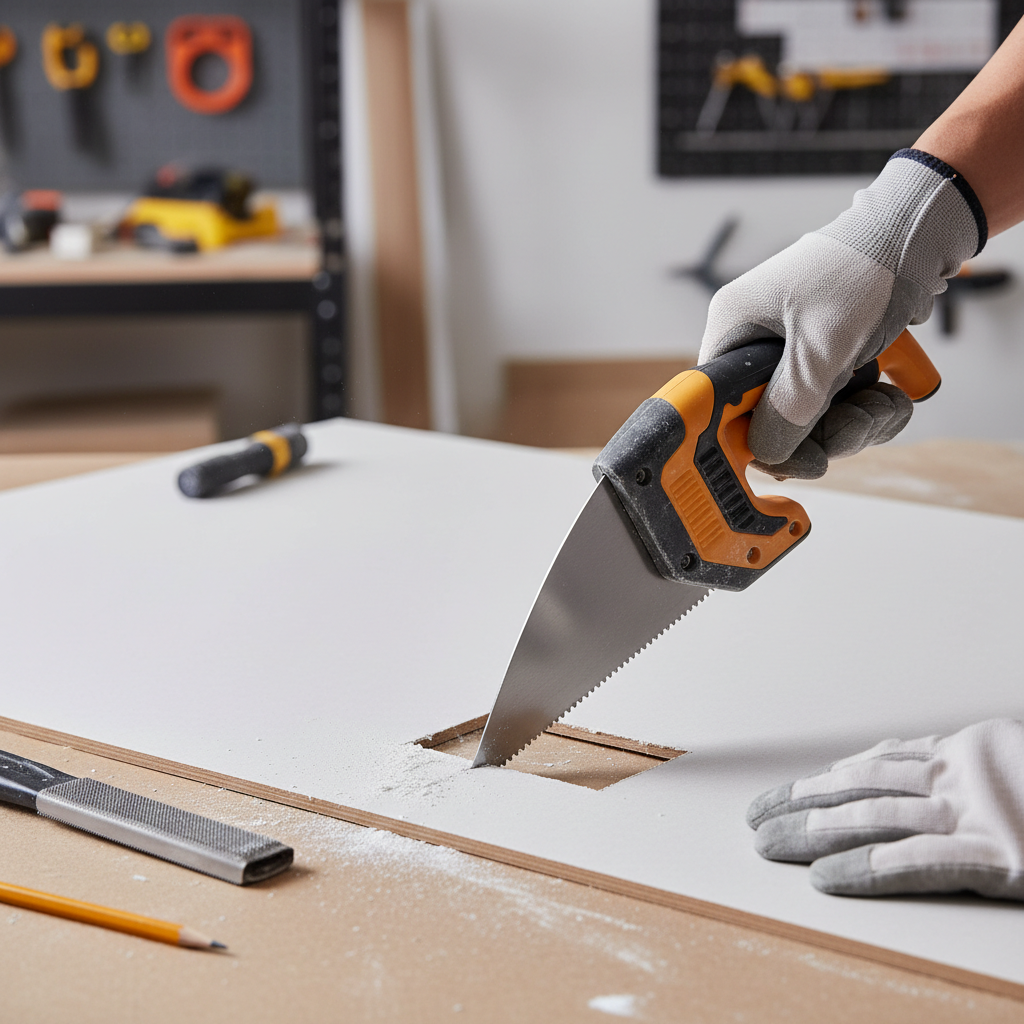
For a box cutout, poke the jab saw tip through the drywall inside the marked rectangle, then angle the saw so it doesn’t blow out the edge.
- Make short strokes until the kerf forms.
- Cut toward each corner, then reset your angle to follow the next side.
- Stop just shy of the corner, then connect the corner with a careful final stroke.
When people ask how to cut drywall with a hand saw for outlets, this “inside the line, slow to corners” approach is usually what saves the face paper.
5) Clean the edge instead of “re-cutting” it
A drywall rasp removes small bumps fast and keeps you from widening the cut too much. For tight fits, rasp a little, test fit, then rasp again.
Rule of thumb: if you’re removing more than about 1/8 inch, it’s often better to re-mark and re-cut rather than grinding forever.
Practical tips for common cuts (outlets, windows, patches, installed sheets)
Different cuts fail in different ways. These are the small adjustments that prevent the usual headaches.
Outlet and switch boxes
- Measure from two reference edges, then transfer those measurements to the sheet.
- Keep the opening slightly undersized, then rasp to final fit.
- If the box is proud or recessed, your drywall fit can change, test as you go.
Cutting around windows/doors
- Hang the sheet, then mark the opening from the back side when possible.
- Score the perimeter before you saw, it reduces paper tear at the edge.
- Support the cutout area so it doesn’t break and tear the face as it falls.
Patching a hole
- Square up the damaged area with a knife and straightedge, cleaner than a freehand saw cut.
- Cut the patch piece slightly smaller than the hole, then fine-tune with a rasp.
Safety and dust control (worth doing even for small jobs)
Drywall dust can irritate eyes and lungs, and in older homes there may be other materials present that you can’t identify by sight. If you’re unsure about what you’re cutting into, it’s smart to pause and ask a pro.
- Wear eye protection, small chips can pop off when you start a jab cut.
- Use a mask if you’re cutting multiple sheets or working overhead.
- Ventilate and vacuum with a HEPA-rated unit if dust spreads easily in the space.
- Cut away from wiring and plumbing, and shut off power near electrical boxes when there’s any doubt.
According to CDC, improving ventilation and reducing airborne particles can help lower exposure to dust in indoor environments.
Common mistakes that waste drywall (and how to avoid them)
- Starting the saw on the line without scoring: score first, especially on the finished face side.
- Letting the sheet hang off the supports: keep the cut line supported so it won’t crack ahead.
- Cutting openings oversized: stay inside the line, then rasp out to the mark.
- Trying to “fix” a wavy cut by sawing more: re-mark a straight line, then trim intentionally.
- Dull blade behavior: if the saw is tearing paper badly, swapping the saw can be faster than fighting it.
Quick takeaway: most ugly edges come from speed, not from lack of strength. Slow down for the first few strokes, then it goes faster anyway.
When it makes sense to call a professional
If this is a simple patch, DIY often works fine. But a few situations deserve extra caution.
- You suspect the wall contains hazardous material, or you’re unsure what’s behind it.
- You need clean, tight results in a highly visible area and you don’t have room for error.
- The job involves moving electrical, plumbing, or cutting into fire-rated assemblies, local code and inspection rules may apply.
In many cases, a drywall contractor or handyman can cut and hang quickly, and you can still do the finishing yourself if you want to save cost.
Conclusion: a clean cut is mostly about the setup
how to cut drywall with a hand saw isn’t really a mystery tool trick, it’s careful marking, scoring the paper, supporting the sheet, then using the saw where it actually helps. If you do one thing differently next time, score first and stay inside the line on cutouts.
If you’re about to start, grab a sharp knife, a jab saw, and a rasp, then practice one test cut on a scrap piece before you touch the “real” sheet. That tiny warm-up often prevents the one mistake that ruins your day.
FAQ
- Can I cut drywall with a regular hand saw instead of a drywall saw?
Yes, especially for longer cuts when the sheet is well supported, but a fine-tooth saw tends to tear less. For interior cutouts, a jab saw is usually easier because it starts without a drilled hole. - What’s the easiest way to cut a straight line without power tools?
Score with a utility knife against a straightedge, snap the sheet, then cut the back paper. It’s typically straighter than freehand sawing. - How do I prevent the paper from ripping past my cut line?
Score the face paper first and start your saw inside the waste area. If you see the paper lifting, slow down and shorten your strokes until the cut stabilizes. - How do I cut an outlet hole so the cover plate hides the edge?
Keep the opening slightly tight and centered on the box, then rasp to fit. If you cut too large, the cover plate might not fully hide gaps, especially on larger plates. - Should I cut drywall from the front or the back?
Most marking happens on the face side, but the cleanest long cuts come from scoring the face, snapping, then cutting the back paper. For openings, you’re usually cutting from the face you marked. - Why does my drywall crack while I’m cutting?
Usually the sheet flexes because it isn’t supported near the cut. Add support under both sides of the line, and don’t force the saw when the sheet vibrates. - Is drywall dust dangerous?
It can irritate lungs and eyes, and dust control is a good idea even on small jobs. If you have concerns about older materials or unknown debris, consider consulting a professional before cutting.
If you’re doing a room worth of panels and want a more predictable workflow, it may help to set up a simple cutting station with sawhorses, a straightedge, and a rasp so every sheet gets the same clean routine without improvising each cut.